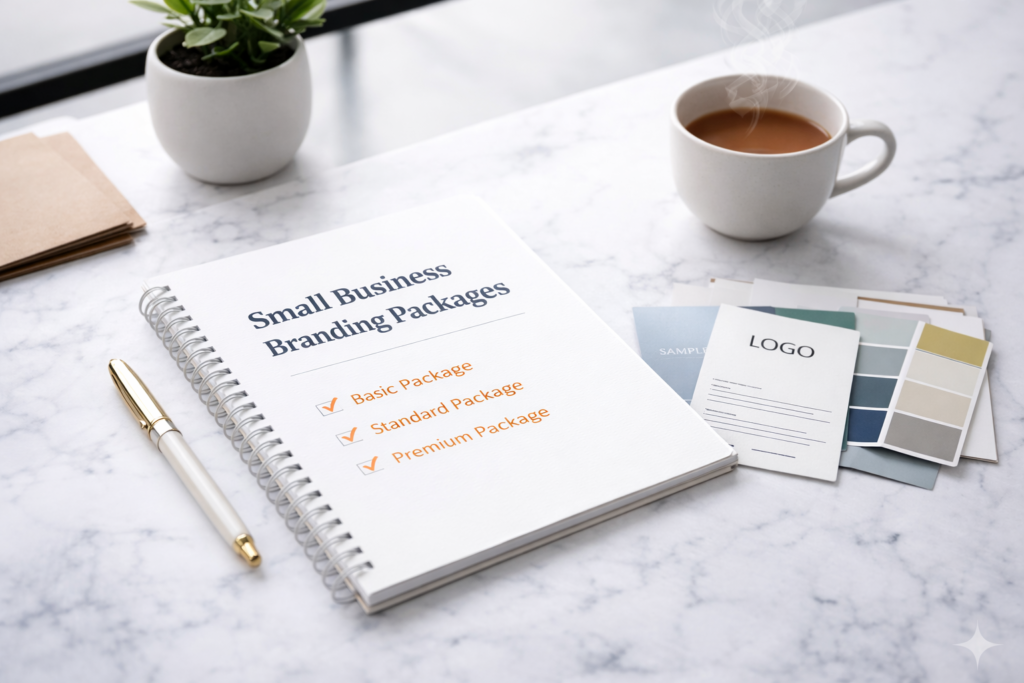
Introduction
Starting a new venture is an exhilarating journey, but many entrepreneurs stumble early on because they fall victim to the most common Small business branding mistakes beginners make during their launch phase. When you understand these pitfalls, you can navigate the complex world of professional identity with much more confidence and clarity. Branding is not merely about having a pretty picture; it is about the emotional resonance and psychological trust you build with your audience from day one. Failing to recognize the weight of your visual and verbal messaging can lead to a fragmented presence that confuses your market and drives potential leads directly into the arms of your more established competitors.
The Foundation of Identity and Initial Strategy
The very first area where we see Small business branding mistakes beginners make is in the lack of a defined strategic foundation. Most beginners start by picking a color they personally like or a font they saw on a popular social media post without ever asking if those elements actually represent their business goals. This “gut-feeling” approach is dangerous because it ignores the psychology of the consumer. Your brand is not for you; it is for your customer. If you are building a high-end consulting firm but use bright, neon “hobbyist” colors, you are sending a mixed signal that will prevent people from taking your services seriously. This lack of intentionality is a cornerstone of why many startups fail to gain traction in their first year.
To avoid the primary Small business branding mistakes beginners make, you must start with a deep-dive audit into your brand persona. Who are you as a business? If your company were a person, would they be the sophisticated expert in a suit or the friendly, approachable neighbor in a t-shirt? Many beginners try to be everything to everyone, which results in a brand that is bland and forgettable. By narrowing your focus and committing to a specific persona, you create a “hook” that your audience can latch onto. This clarity allows you to make design decisions much faster because you can simply ask, “Does this specific shade of navy blue fit our ‘Sophisticated Expert’ persona?” If the answer is no, you discard it immediately.
Another significant error in the category of Small business branding mistakes beginners make is failing to research the competitive landscape properly. Beginners often operate in a vacuum, creating a look and feel that is far too similar to everyone else in their niche. If every other affiliate in your space is using the same stock imagery and the same blue-and-white color scheme, you must dare to be different. You don’t need to be radical, but you do need to be distinct. If you look exactly like your competitors, the only thing left for the customer to judge you on is price. When you establish a unique visual identity, you move the conversation away from “Who is the cheapest?” to “Who is the best fit for my needs?”
Documentation is the final piece of this foundational puzzle. One of the most avoidable Small business branding mistakes beginners make is keeping all their brand rules “in their head.” As your business grows—even if you are just a small blogger—you will eventually need help from freelancers, virtual assistants, or ad managers. If you don’t have a simple style guide that lists your hex codes, fonts, and brand voice, your identity will quickly become a mess. Consistency is the secret sauce of branding. Every time a customer sees a different font or a slightly different version of your colors, a tiny bit of trust is eroded. A style guide ensures that no matter who is creating your content, the brand remains unified and professional across all touchpoints.
Visual Elements and Corporate Aesthetics
Moving into the visual execution, we encounter a new set of Small business branding mistakes beginners make regarding corporate aesthetics and graphic standards. Many beginners rely too heavily on low-quality, overused stock photos that scream “amateur.” While you might not have the budget for a custom photoshoot yet, choosing imagery that feels authentic and aligned with your persona is vital. If your brand is supposed to be about “Innovation and Technology,” but you use a stock photo of people shaking hands in a dated office from 2005, your visual identity will feel “off” to the modern consumer. Your imagery should act as a window into the future your customer wants to achieve, not a reminder of a generic past.
Typography is another area where Small business branding mistakes beginners make are incredibly visible. Beginners often use too many fonts—sometimes three or four in a single social media post—thinking it looks “creative.” In reality, it looks cluttered and hard to read. A professional visual identity usually relies on two main typefaces: one bold, personality-filled font for headings and one clean, highly readable font for body text. This hierarchy guides the reader’s eye and makes your information easy to digest. When you constantly change your fonts, you lose the “pattern recognition” that allows people to know a post is yours before they even see your name.
Color psychology is frequently ignored in the list of Small business branding mistakes beginners make. Beginners often pick a palette based on personal preference rather than the emotional response they want to trigger. If you are in the health and wellness space, using aggressive reds and blacks might feel too intense for someone looking for peace and healing. Conversely, if you are a high-energy fitness brand, soft pastels might fail to motivate your audience. Your colors are the first thing the brain processes—often before it even registers the shapes or words. Getting your palette right is about more than just aesthetics; it’s about setting the emotional stage for the entire customer experience.
Furthermore, a common visual error in the Small business branding mistakes beginners make category is failing to design for “scale.” A complex, detailed graphic might look great on a large desktop monitor, but it becomes an unrecognizable blur as a small profile picture on a smartphone. In 2026, most of your audience will interact with your brand on mobile devices. Your visual elements must be simple, bold, and scalable. If your brand markers lose their impact when shrunk down to the size of a favicon, they are not doing their job. Simplicity is not about doing less; it is about making your message more powerful and harder to ignore across every platform, from a giant billboard to a tiny notification on a smartwatch.
Digital Presence and Platform Consistency
The third step focuses on how you rollout your look, where Small business branding mistakes beginners make involve a lack of coordination across different digital channels. It is very common to see a small blogger have a beautiful, professional header on their website but a messy, personal-looking profile on Facebook or TikTok. This fragmentation is a major trust-killer. Your digital presence is a holistic ecosystem. If a customer clicks an ad from a professional-looking Facebook page and lands on a website that feels completely different, they will experience “brand whiplash.” This confusion leads them to hit the back button because they are no longer sure they are in the right place.
Consistency across platforms is key to avoiding whiplash; use our simple checklist for a cohesive visual identity to audit your social media profiles today
To avoid these Small business branding mistakes beginners make, you must treat every social media profile as a satellite office of your main brand. Every bio, header image, and link must be updated to match your core style guide. This doesn’t mean every post has to be a carbon copy of the last, but the “vibe” must be identical. If you are running a $5 daily ad campaign, this consistency becomes even more critical. You are paying for people to notice you; don’t waste that investment by sending them to a landing page that doesn’t fulfill the visual promise made in the ad. Your ad and your website should feel like two chapters of the same book.
Another digital trap in the Small business branding mistakes beginners make list is ignoring the “User Experience” (UX) as part of the brand. Branding is not just what people see; it is how they feel when interacting with your digital presence. If your site is slow, hard to navigate, or full of broken links, that becomes your brand. “This company is frustrating to deal with” is a brand identity, just like “This company is helpful and fast.” Many beginners spend so much time on the logo that they forget to check if their mobile menu actually works. A professional digital presence is one that respects the user’s time and makes it as easy as possible for them to find the information or products they need. [INSERT INTERNAL LINK TO LOGOVUE SEO ARTICLE]
Lastly, beginners often fail to leverage “Social Proof” as a branding tool. One of the Small business branding mistakes beginners make is hiding their wins. Branding is about building authority, and nothing builds authority faster than showing that other people trust you. Even if you are a small blogger, including testimonials, “As seen in” logos, or even simple data about how many people you have helped, adds a layer of “Corporate Aesthetics” that signifies you are a real player in your niche. When you combine professional visuals with social proof, you create an “Identity of Success” that makes it much easier for new customers to say yes to your offers or affiliate recommendations.
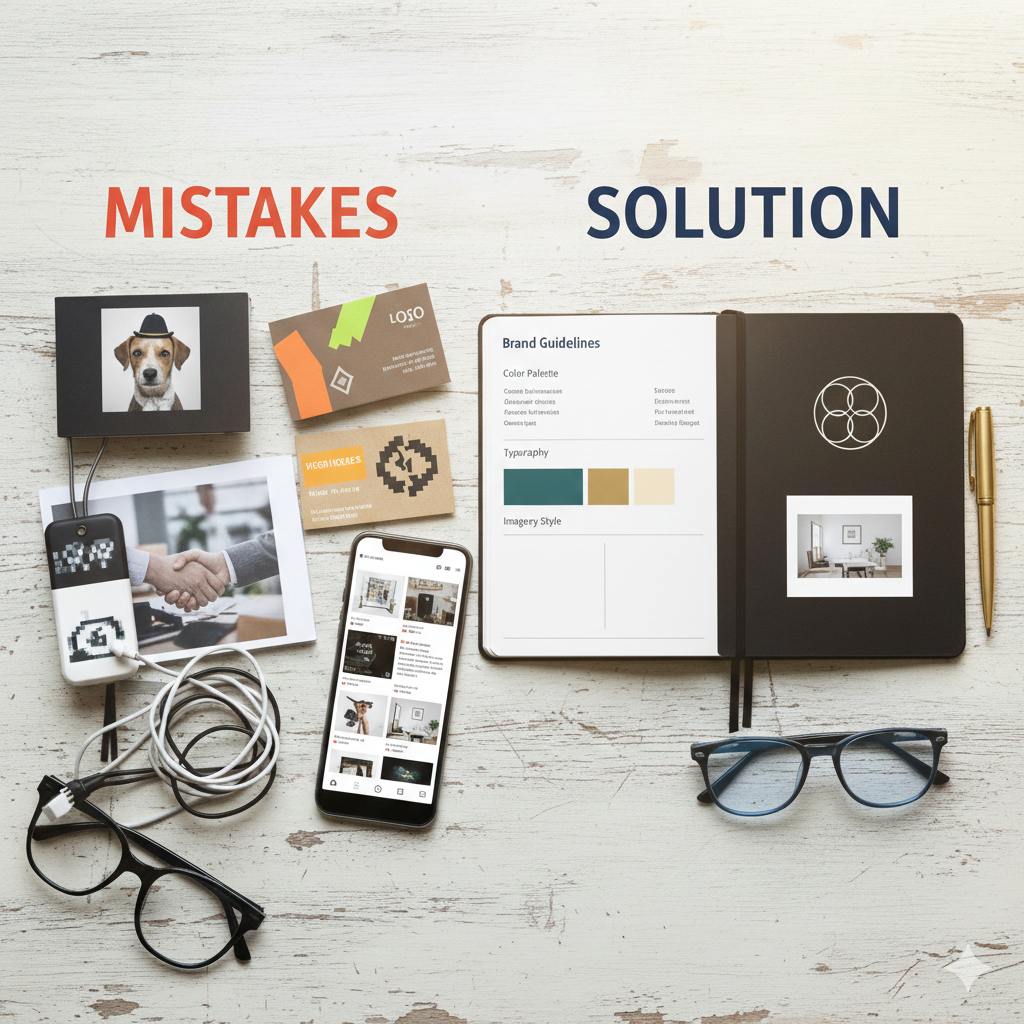
[Image showing a comparison of a fragmented brand vs a unified brand]
Long-Term Maintenance and Avoiding Burnout
The final stage of a professional rollout is long-term sustainability, where the Small business branding mistakes beginners make often involve “Brand Boredom.” About six months into their journey, many beginners get bored with their own colors and fonts and decide to “freshen things up.” This is a huge mistake. Just as your audience is finally starting to recognize your pattern, you change it on them. Major brands like Coca-Cola or Nike don’t change their look every six months because they know that consistency creates equity. If you feel bored, remember that you see your brand 24/7, but your audience might only see it once or twice a week. What feels “old” to you is just becoming “familiar” to them.
To stay on track and avoid the Small business branding mistakes beginners make, you should schedule a “Brand Health Check” every quarter. Instead of changing your colors, use this time to see if your messaging still aligns with your products. Are you still speaking to the right audience? Does your digital presence still reflect your USP? It is much better to make small, incremental improvements than to do a massive, confusing rebrand every year. Your brand is like a garden; it needs regular weeding and watering, not to be dug up and replanted every time a new trend comes along on TikTok.
Another long-term error in the Small business branding mistakes beginners make category is failing to protect their brand assets. Beginners often lose high-resolution files, forget their hex codes, or use low-quality screenshots of their own graphics because they didn’t organize their folders. A professional business treats its visual assets as financial assets. Keep a dedicated folder in the cloud (like Google Drive or Dropbox) with your “Master Brand Kit.” This kit should include your high-res markers, your font files, and your style guide. Having these at your fingertips allows you to move fast when a growth opportunity arises, such as a guest posting spot or a sudden viral moment on social media.
Finally, the biggest of the Small business branding mistakes beginners make is forgetting the human element. In our digital world, people want to connect with people. If your branding is too “corporate” and cold, you lose the opportunity to build a real relationship. Use your brand persona to show some personality. Share “behind the scenes” content, talk about your failures as well as your successes, and engage with your community. A cohesive visual identity is the “suit” you wear to the meeting, but your brand persona is the “handshake” and the “conversation” that actually closes the deal. When you balance professional aesthetics with a relatable human voice, you create a brand that is not only seen but also loved and trusted.
FAQ: Navigating Small Business Branding
What is the most expensive of the Small business branding mistakes beginners make? The most expensive mistake is lack of consistency. When you are inconsistent, you have to spend significantly more on ads and marketing to get the same level of recognition that a consistent brand gets for free through “pattern recognition.”
How can I fix a messy digital presence without starting over? Start with your most visible touchpoints: your profile pictures and your social media headers. Make those identical across all platforms. Then, slowly update your website pages one by one to match your new style guide. It doesn’t have to happen overnight, but it does have to happen.
Do I need an agency to avoid Small business branding mistakes beginners make? No. Most small bloggers can build a professional identity by using high-quality templates, following a strict style guide, and being disciplined about their visual choices. The key is planning, not a massive budget.
What is the difference between a brand persona and a logo? A logo is a graphic symbol. A brand persona is the “personality” of your business. The persona tells you how to speak and what colors to use, while the logo is just one of many tools used to express that persona.
How do I know if my corporate aesthetics are working? Check your engagement and conversion rates. If people are clicking your ads but leaving your site immediately, there might be a “brand gap” where your site doesn’t look as professional as your ad promised.
Can I use trendy colors in my branding? You can, but use them sparingly as accent colors. Your primary colors should be “evergreen” so that they don’t look dated in two years when the trend changes.
Conclusion
Building a successful company is a marathon, not a sprint, and avoiding the Small business branding mistakes beginners make is the best way to ensure you have the stamina to reach the finish line. Your visual identity and brand persona are the most powerful tools in your marketing arsenal because they work for you 24/7, even when you are asleep. By focusing on consistency, strategy, and professional aesthetics, you move from being just another “small blogger” to an authoritative voice in your niche. Remember that your brand is a promise you make to your customers. Every time they see your consistent, professional look, you are keeping that promise and building the trust necessary for long-term affiliate success. For more resources on professional standards, you can check the U.S. Small Business Administration for tips on establishing a formal business presence. Always stay true to your mission, and don’t let the common Small business branding mistakes beginners make derail your path to becoming a recognized leader in your industry.
If you found our guide on Small business branding mistakes beginners make helpful, you’ll love these deep-dives into building a professional identity: 5 Top Logo Designers You Should Hire in 2026: Skip the amateur errors by working with vetted professionals who specialize in corporate aesthetics